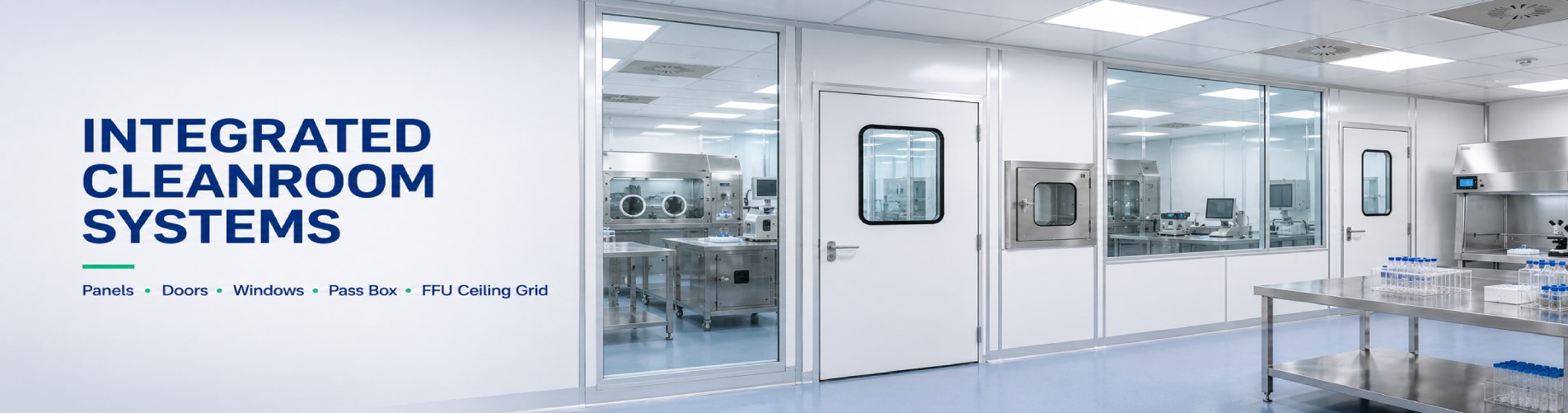
Technical Analysis | Semiconductor Cleanroom Ceilings
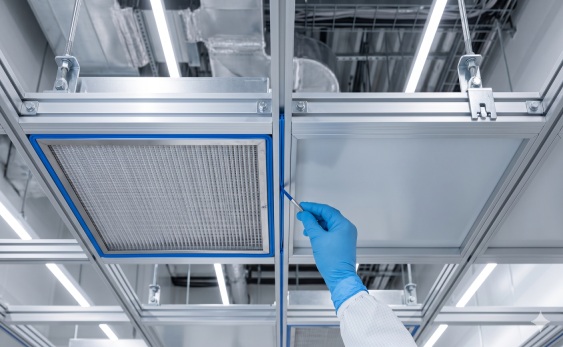
Semiconductor cleanrooms are not controlled by particle class alone. Airborne molecular contamination and electrostatic discharge can both originate in the ceiling zone, where FFUs, chemical filters, aluminium ceiling grids, sealants, lighting, access panels and maintenance activity interact with ultra-sensitive process environments.
cleanroom ceiling walkable ceiling FFU ceiling grid aluminium ceilings
| AMCMolecular acids, bases, organics and dopants. | StaticESD risk from surfaces, airflow and maintenance. | CeilingFFUs, grids, panels, gaskets and access points. | ControlMaterials, filtration, grounding and monitoring. |
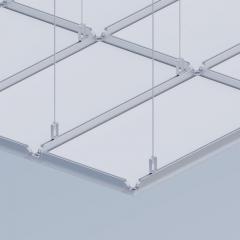
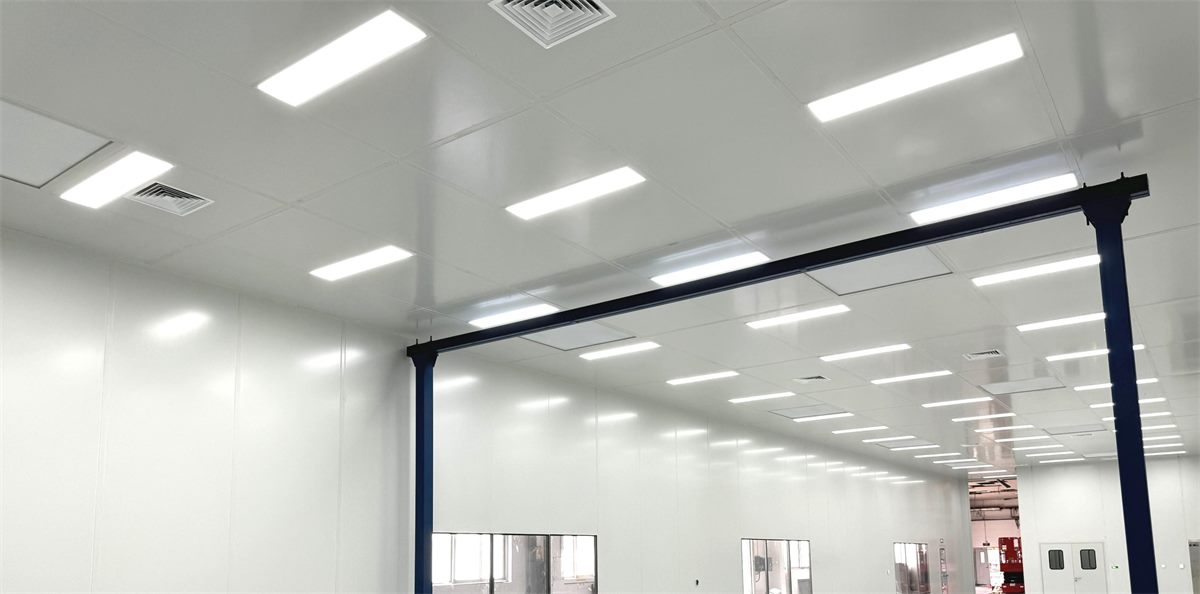
A semiconductor ceiling system should be specified as a contamination-control platform, not only as a mechanical support grid. The ceiling must distribute clean air, carry FFUs and filter modules, limit molecular outgassing, provide safe maintenance access and maintain a continuous grounding strategy for electrostatic control.
Why It Matters
ISO 14644-1 particle classification is essential for semiconductor manufacturing, but advanced lithography, deposition, etching, metrology and wafer handling also respond to molecular-level contamination and electrical charge. A room can pass particle classification and still create yield risk if acids, bases, condensable organics, dopant compounds or charge-generating surfaces are not managed.
The ceiling zone is a critical interface because it combines airflow, filtration, sealing, lighting, cable routing, access panels and maintenance activity. Any poorly selected coating, gasket, adhesive, cable jacket or sealant can become an AMC source. Any isolated metal frame or high-resistance surface can become part of a static-control problem.
AMC Definition
Airborne molecular contamination, often abbreviated as AMC, refers to chemical contaminants in the air rather than particles alone. ISO 14644-8:2022 addresses air chemical cleanliness by chemical concentration, while SEMI F21 is used in semiconductor environments for airborne molecular contaminant level classification. In semiconductor environments, typical AMC groups include acidic compounds, basic compounds, condensable organics and dopant or metal-related species. These contaminants can interact with wafers, photoresist, optics, reticles, sensors and process chemistry.
For ceiling design, the first step is to map where molecular contaminants may enter or form: make-up air, process exhaust backflow, construction materials, ceiling panels, sealants, filters, maintenance solvents, cable trays and plenum components. Once the source map is clear, the ceiling specification can define material restrictions, chemical filtration strategy and monitoring points.
| Ceiling element | AMC risk | Static risk | Engineering control |
|---|---|---|---|
| Aluminium ceiling grid | Coating, oil residue or cleaning residues. | Isolated metal sections. | Low-outgassing finish, cleaning validation and bonded grounding path. |
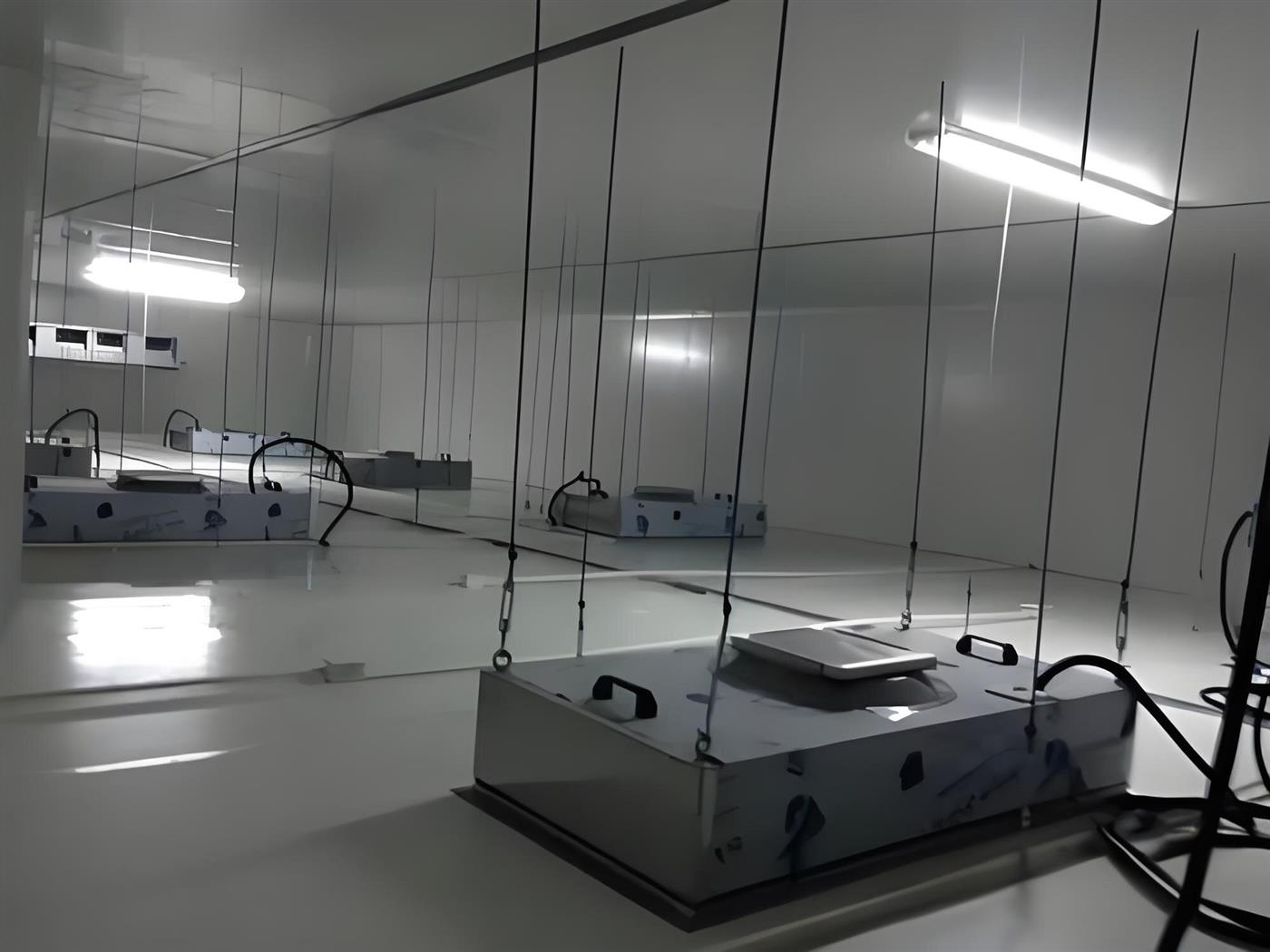
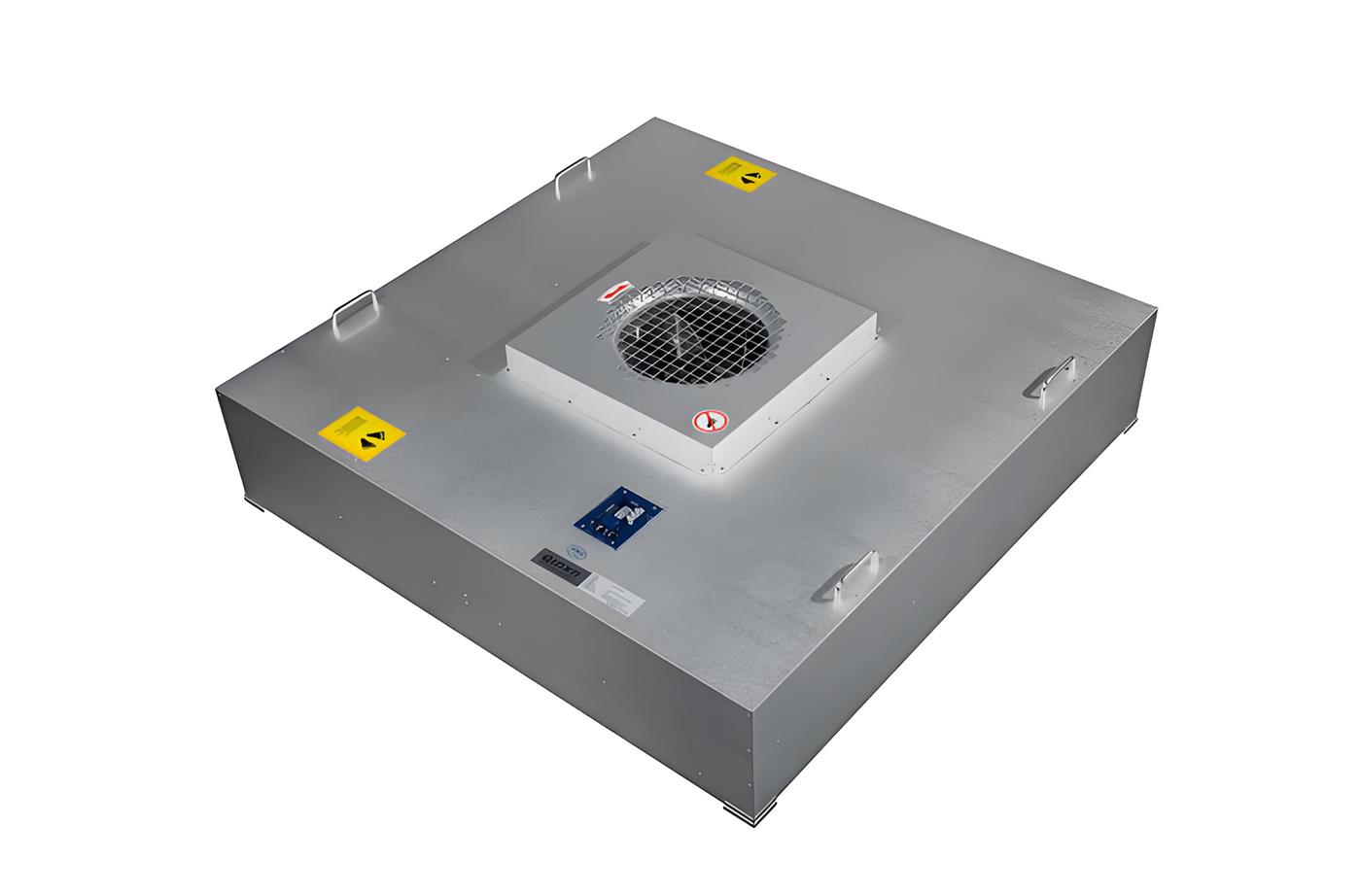
| FFU and filter module | Filter media, adhesives, gaskets or fan heat. | Unbonded casing or cable routes. | Compatible HEPA/ULPA and chemical filters, gasket control and equipment bonding. |
| Access panels | Sealants, lubricants and maintenance particles. | Charge transfer during service work. | Tool control, ESD-safe service procedure and repeatable sealing detail. |
| Lighting and cable routes | Plastics, jacket materials and heat aging. | Floating conductive parts. | Approved materials, cable management and grounding verification. |
Ceiling Materials
Semiconductor ceiling materials should be reviewed for cleanliness, chemical compatibility, outgassing behavior, corrosion resistance and electrical continuity. Aluminium ceilings are widely used because they combine low weight, structural stability and corrosion resistance, but the finish, cleaning process and connection method still matter.
For an AMC-sensitive fab, avoid treating coatings, adhesives, gasket materials and sealants as generic construction items. They should be reviewed against the process risk, the cleaning chemistry and the chemical filter strategy. In high-risk zones, material samples or supplier declarations may be needed before final approval.
The best semiconductor cleanroom ceiling is not only strong and airtight. It is also low-emission, cleanable, corrosion-resistant and electrically integrated into the static-control plan.
Chemical Filtration
HEPA or ULPA filtration controls particles, but molecular contamination requires chemical filtration or source reduction. The ceiling design must therefore reserve space, access and pressure budget for the correct chemical filter modules. Acid gas, base gas, organic vapor and dopant control may require different media or staged filtration.
Do not specify chemical filters as a generic accessory. The project team should define the target AMC groups, expected challenge concentration, service life, pressure drop, replacement access, leakage control and monitoring plan. When filters sit above a cleanroom ceiling, safe access and repeatable sealing are part of the contamination-control design.
Static Control
Electrostatic risk is not solved by choosing one conductive component. The ceiling grid, FFU casings, metal access panels, cable trays, lighting housings and service platforms need a defined bonding and grounding concept. ANSI/ESD S20.20 guidance from ESDA emphasizes bonding, grounding and ESD control measures as part of a formal control program. The objective is controlled charge dissipation without creating unsafe or unstable current paths.
Static risk can increase during maintenance, filter replacement and tool movement above the ceiling. Operators, ladders, carts, gloves, plastic covers and temporary cable routing can all change charge behavior. The ceiling maintenance procedure should therefore be part of the ESD control program, not only a mechanical service instruction.
Specification Checklist
Technical Fact Check
| Fact used | Source | Design implication |
|---|---|---|
| ISO 14644-1 classifies cleanrooms by airborne particle concentration. | ISO 14644-1:2015 | Particle class must be defined, but it does not fully cover AMC or ESD risk. |
| ISO 14644-8 addresses air chemical cleanliness by chemical concentration. | ISO 14644-8:2022 preview | AMC control should be treated separately from particle control. |
| SEMI F21 is used in industry for airborne molecular contaminant level classification in clean environments. | SEMI F21 | Semiconductor ceiling design should identify target AMC species and filter strategy. |
| ESD control programs use defined administrative and technical controls for electrostatic discharge risk. | ESD Association standards | Ceiling grounding and service procedures should be included in the static-control plan. |
Referenced Standards
The technical references below are attached so readers can verify the standards used in the article. Some ISO, SEMI and ANSI/ESD standards are copyrighted documents, so the official page or public preview may be freely viewable while the complete standard may require purchase or authorized access.
Wonclean can support cleanroom ceiling systems, FFU ceiling grids, aluminium ceilings, cleanroom panels and modular cleanroom envelopes for semiconductor and precision manufacturing projects.
AMC means airborne molecular contamination. It refers to chemical contaminants in the air, such as acidic, basic, organic or dopant-related compounds, that may affect wafers, optics, photoresist, reticles or sensitive process steps.
The ceiling contains FFUs, filter modules, gaskets, access panels, lights, cable routes and service areas. These elements can either reduce AMC through filtration and source control, or introduce molecular contaminants if materials and maintenance procedures are poorly specified.
Aluminium ceiling grids can support static-control design when they are electrically bonded and verified. Conductive material alone is not enough; the ceiling needs a continuous, documented grounding path.
HEPA and ULPA filters target particles. Molecular contaminants require source control and, where needed, chemical filtration selected for the target contaminant species.
For semiconductor cleanrooms, ceiling design is a yield-protection decision. A cleanroom ceiling should combine particle filtration, AMC source control, chemical filtration, low-emission materials, walkable maintenance access and verified static-control continuity. When these elements are specified together, the ceiling becomes a controlled engineering platform rather than a passive overhead structure.

 Room JT30151, Building 4, Area B, No. 925 Yecheng Road, Industrial Zone, Shanghai,China
 Info@wonclean.com
Allen@wonclean.com
Joy@wonclean.com
Info@wonclean.com
Allen@wonclean.com
Joy@wonclean.com
 +86 13671979988(Allen)+86 15950938878(Joy)


 온라인 서비스

