무엇을 찾고 계신가요?
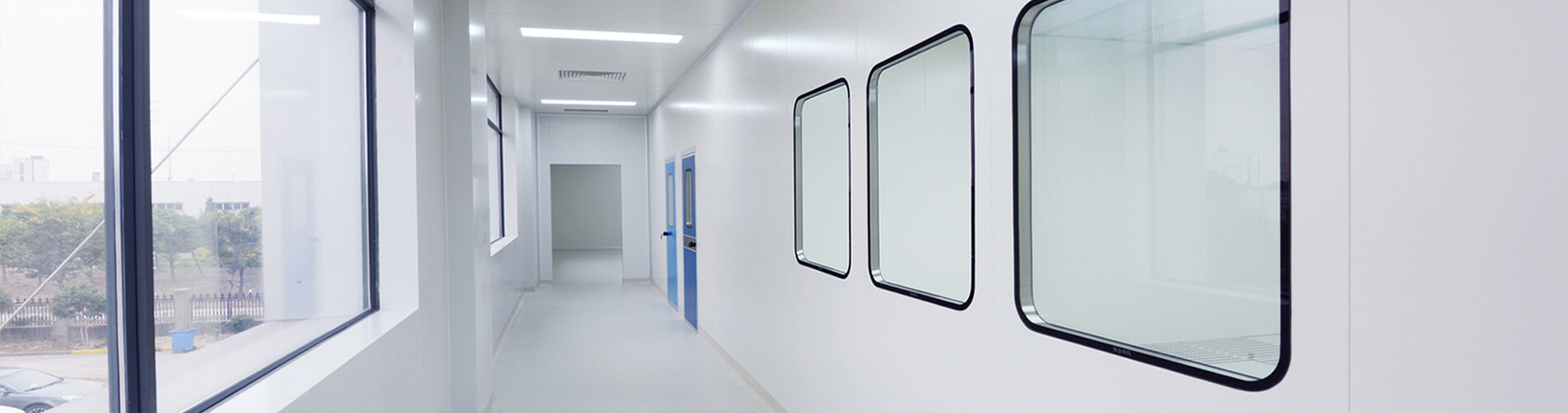
Among the many types of cleanroom air purification equipment, the FFU (Fan Filter Unit) has gradually become one of the core devices drawing industry-wide attention. As the semiconductor, biopharmaceutical, and precision manufacturing sectors continue to raise their standards for air cleanliness, the definition, structure, and application of FFUs have become the most frequently asked topics among users. This article provides a systematic explanation of the working principles and value of FFUs—from basic concepts and design features to application scenarios. It aims to help users understand the meaning of FFU from a professional perspective and offer guidance for selecting the right cleanroom solution for different projects.
An FFU (Fan Filter Unit) is a motor-driven air filtration device whose primary function is to actively draw in return air through an internal fan and purify it layer by layer using a pre-filter and high-efficiency filters such as HEPA or ULPA. This process ensures a stable, uniform, and controllable output of clean air.
As a provider of integrated cleanroom solutions, Wonclean regards FFUs as key driving modules within the cleanroom air circulation system. our design philosophy is built around three principles: high-efficiency filtration, stable airflow velocity, and continuous cleanliness.
From the perspective of FFU meaning, an FFU is not merely a filter device; it is an independent clean air generation system. In modern cleanroom technology, it plays a decisive role by supporting the overall environmental stability and contamination control of the workspace.
In the manufacturing and deployment of cleanroom equipment, FFUs are typically built with modular steel housings in dimensions of 4'×2', 3'×2', or 2'×2', allowing them to be easily integrated into ceiling grid systems of matching sizes. Inside each unit, a pre-filter is combined with high-performance filtration components such as HEPA, ULPA, or filters that meet specific MERV ratings. The built-in fan draws in return air and pushes it through multiple filtration stages before delivering a steady stream of purified air to cleanroom areas or localized controlled spaces, such as hoods or individual workstations. To accommodate varying operational requirements, the airflow of an FFU can be precisely adjusted through multi-stage fan controls or rheostat-type regulators, ensuring that different cleanliness standards are consistently met.
For applications with more stringent purification demands, the choice of filter becomes especially critical: HEPA media can remove particles ≥0.3 μm with 99.99% efficiency, whereas ULPA filters achieve 99.999% efficiency for particles ≥0.12 μm. To maintain stable air quality in critical production or research environments, FFUs are designed to deliver laminar airflow, allowing air to move in a uniform direction and at a constant velocity. This design minimizes turbulence that could otherwise generate irregular vortices and cause contaminating microparticles to settle on clean surfaces.
FFUs have a wide range of applications in cleanrooms, covering nearly all scenarios that require strict air cleanliness. In large-scale clean manufacturing facilities, FFUs can be evenly installed within ceiling grid systems to provide stable, laminar airflow throughout the space, meeting air change requirements for different ISO cleanliness levels.
In laboratory or pharmaceutical production environments, FFUs can be used for localized purification, such as in hoods, enclosed workstations, or microenvironment equipment, ensuring that critical operational areas maintain consistently clean air.
In sectors like semiconductors, electronic packaging, and biotechnology, FFUs supply efficient and controllable airflow around equipment to prevent the settling of tiny particles that could affect product quality.
Additionally, the modular design of FFUs makes them highly suitable for temporary or flexible clean spaces, such as R&D laboratories or small production lines, allowing the number of units to be quickly increased or adjusted according to project requirements to ensure a consistent supply of clean air.

 Room JT30151, Building 4, Area B, No. 925 Yecheng Road, Industrial Zone, Shanghai,China
 info@wonclean.com


 온라인 서비스

